



项目介绍
The Kavli Institute for Systems Neuroscience is recruiting a
About the position
We are looking for a highly motivated PhD Candidate to join our research group and investigate the neural architecture underlying sensory processing in the zebrafish forebrain. This project will employ a powerful combination of cutting-edge imaging and computational approaches to reveal how the structural organization of brain circuits shapes sensory computation.
Are you motivated to take a step towards a doctorate and open up exciting career opportunities? As a PhD Candidate with us, you will work to achieve your doctorate, and at the same time gain valuable experience that qualifies you for a further career in higher education and research, in and outside academia.
Your immediate leader will be Professor Emre Yaksi.
- 3D Electron Microscopy Reconstructions: Reconstruct and analyze large-scale, high-resolution ultrastructural maps of zebrafish forebrain circuits using 3D volume electron microscopy. Synaptic connectivity, cell type identity, and subcellular organization will be extracted using state-of-the-art segmentation and reconstruction software packages.
- Calcium Imaging: Employ two-photon calcium imaging to record population-level neural activity in the zebrafish forebrain during defined sensory stimulation paradigms. Functional response properties will be mapped onto anatomically identified circuit elements.
- Confocal Microscopy and Histology: Use confocal microscopy, immunohistochemistry, fluorescence in situ hybridization, and tissue clearing approaches to characterize cell types, molecular markers, and projection patterns in the zebrafish forebrain.
- Anatomical Reconstructions: Perform single-neuron and population-level anatomical reconstructions to map connectivity patterns and delineate the structural organization of forebrain sensory circuits.
- Data Analysis and Computational Methods: Develop and apply computational pipelines for processing large-scale imaging datasets, integrating structural and functional data, and identifying organizational principles of sensory processing circuits.
- Complete the doctoral education until obtaining a doctorate
- Carry out high-quality research within the framework described above
- Contribute to academic publications and popular science dissemination
- Participate actively in the research group: the Yaksi lab at the Kavli Institute
- Participate in international activities such as conferences and/or research stays at foreign institutions
- Contribute to undergraduate and master-level teaching
- Engage in career-promoting activities (seminars, journal clubs, lab meetings)
- Hands-on experience with reconstructing 3D electron microscopy and associated data analytical software packages for image segmentation and neural reconstruction (e.g., CAVEclient, CloudVolume, Neuroglancer, or equivalent).
- Hands-on experience producing 3D visualizations, renderings, or animations of reconstructed neural structures or volumetric imaging data (e.g., using Blender or comparable 3D rendering software), to support scientific communication and dissemination of the project’s findings.
- Experience with Python programming, including data analysis libraries (e.g., NumPy, SciPy, etc.) and/or image processing packages. Proficiency in scripting reproducible analysis pipelines is expected.
- Practical experience with confocal microscopy and standard histological techniques, including immunohistochemistry, fluorescence labeling, and/or tissue clearing methods.
- Experience with anatomical reconstructions of neural circuits, including tracing of axonal projections, dendritic arbors, or synaptic connectivity, from either light-microscopy or electron-microscopy datasets.
- Experience with zebrafish husbandry, including routine maintenance of zebrafish colonies, breeding, and basic larval and adult handling procedures.
- Excellent written and oral communication skills in English.
- Experience with calcium imaging (two-photon) and associated data analysis of neural population activity in zebrafish or other vertebrate models.
- Co-authorship in a high quality peer-reviewed scientific publication or preprint. This is considered a major advantage and will be weighted strongly in the candidate assessment.
- Excellent oral presentation skills and experience presenting research at group meetings, workshops, or international conferences.
- Experience preparing scientific figures using Adobe Illustrator, Inkscape, or comparable graphic design software.
- Work independently and take initiative
- Work in a structured way, set goals, and make plans to achieve them
- Present and discuss your research with other professionals
- Get involved and contribute constructively with feedback
- Work constructively under pressure or in the face of adversity
- Show curiosity and a strong motivation for the subject
- Analyze data, assess different perspectives, and draw well-founded conclusions
- Be flexible and open to adjusting the plan for the project as needed.
- An exciting research position in a world-leading neuroscience institute with an important mission in society
- Developing tasks in a strong and international scientific environment
- Career guidance and follow-up throughout the PhD period
- Open and inclusive working environment with committed and collaborative colleagues
- Working capital to implement the project, including access to state-of-the-art imaging infrastructure
- Mentor programme as a new employee at NTNU
- As a public employee, favorable benefits as a member of the Norwegian Public Service Pension Fund (SPK)
Diversity
Diversity is a strength, and at NTNU we aim to be an employer that reflects the diversity in society and that makes use of the potential of the population’s collective skills. Our vision is Knowledge for a better world and our values are creative, critical, constructive and respectful. We believe that an organization that is equal, diverse and gender-balanced is essential for us to achieve our goals.
We strive to attract employees with different skills, life experiences and perspectives to contribute to even better problem solving of our societal mission in research and education.
If you think this position is relevant and interesting, we encourage you to apply, regardless of gender, functional ability and cultural background, or whether you have been out of work for a period of time.
Salary and conditions
In the position of PhD Candidate, code 1017, your gross salary will normally be NOK 580 000,- per annum depending on qualifications and seniority. A 2% statutory contribution to the State Pension Fund is deducted from the salary.
The employment period is three years for the doctoral work in addition to four months of career promotion work. (A minimum of three work years of the total term period must be dedicated to doctoral work.)
For employment as a PhD Candidate, it is a prerequisite that you gain admission to the PhD programme within three months of your employment contract start date, and that you participate in an organized doctoral programme through out the period of employment.
As an employee at NTNU, it is important that you keep yourself up to date with academic and organizational changes and adapt to them.
For the necessary professional and social interaction, it is a prerequisite that you are physically present and available to the institution on a daily basis.
The appointment is carried out in accordance with the principles of the State Employees Act, and Export control (legislation that regulates the export of knowledge, technology and services). Candidates who, after assessment of the application and attachments, are considered to bein conflict with the criteria in the latter act, will not be able to be employed.
- Transcripts and diplomas for Bachelor’s and Master’s degrees. If you have recently submitted your Master’s thesis and have not yet received your diploma, you may attach a draft of the thesis; documentation of the completed degree must be presented before taking up the position.
- Curriculum Vitae (CV) including a full list of publications (maximum 2 pages).
- Motivation Letter (maximum 1 page): A letter explaining your motivation for applying, your scientific interests, and how your background and past experience fulfill the required and preferred selection criteria listed above. Please be specific and connect your experience directly to the skills required for this position.
- Research Proposal (maximum 1 page): A concise research proposal outlining your ideas for how you would approach one or more of the scientific aims described in this project. The proposal should demonstrate your understanding of the methods involved and your ability to formulate scientific questions. It does not need to follow the exact aims of the project — original ideas inspired by the project scope are welcome.
- If available: copies of publications and/or preprints (including any work in preparation where you are a co-author).
- Names and full contact information of two relevant academic referees who can be contacted to provide letters of recommendation.
General information
A public list of applicants with name, age, job title and municipality of residence is prepared after the application deadline. If you wish to be exempt from entry on the public applicant list, this must be justified. Assessment will be made in accordance with current legislation. You will be notified if the exemption is not granted.
If you think this position looks interesting and in line with your qualifications, you are welcome to apply.
If you have any questions about the position, please contact professor Emre Yaksi, email: emre.yaksi@ntnu.no
If you have any questions about the recruitment process, please contact HR advisor Camilla Perrin Wenaas, camilla.p.wenaas@ntnu.no
Application deadline: 31.10.2025
—————–
For practical information about working at NTNU, please visit this webpage.
The city of Trondheim is a modern European city with a rich cultural scene. Trondheim is the tech capital of Norway with a population of 200,000. The Norwegian welfare state, including healthcare, schools, kindergartens and overall equality, is probably the best of its kind in the world. Professional subsidized day-care for children is easily available. Furthermore, Trondheim offers great opportunities for education (including international schools) and possibilities to enjoy nature, culture and family life and has low crime rates and clean air quality.
via Unsplash
NTNU – knowledge for a better world
NTNU – knowledge for a better world
The Norwegian University of Science and Technology (NTNU) creates knowledge for a better world and solutions that can change everyday life.
The Kavli Institute for Systems Neuroscience is part of the Faculty of Medicine and Health Sciences at NTNU. It was established as a Centre of Excellence in 2002 and designated as a Kavli Foundation Institute in 2007. The institute’s goal is to be world-leading within the field of systems neuroscience and to understand how brain circuits give rise rice to cognition, behavior, and mental function in the brain. This is achieved by integrating cutting-edge technologies with computational and translational approaches.
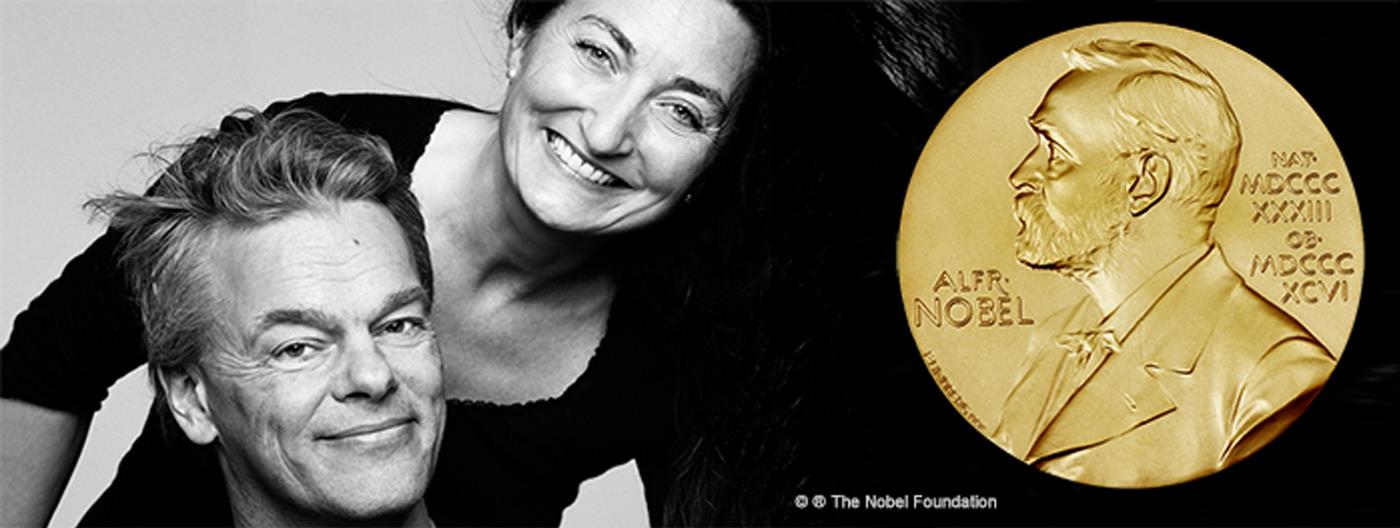
In 2014, the Nobel Prize in Physiology or Medicine was awarded to two of the Institute’s professors, Edvard Moser and May-Britt Moser. The Institute is responsible for an international master’s programme and is affiliated with a doctoral programme in medicine. Through our widespread network of international collaboration, we offer unique career opportunities
The Institute’s slogan is: Excellent science, happy people, happy animals, and diversity.

联系方式
电话: (+47) 73 59 50 00相关项目推荐
KD博士实时收录全球顶尖院校的博士项目,总有一个项目等着你!